Best Joint Supplements for Senior Dogs 2026
Compare 8 top-rated joint supplements for senior dogs. Glucosamine doses, ingredient quality, and which supplements vets actually recommend for aging dog joints.
Watching your senior dog struggle to get up from the floor, hesitate at the stairs, or slow to a shuffle on a walk that used to energize them, it's one of the harder parts of loving an aging dog. Joint degeneration affects an estimated 80% of dogs over age 8, and while you can't reverse it, the right joint supplement can genuinely slow its progression and reduce daily discomfort. The challenge is cutting through the marketing noise to find what actually works.
We researched the leading joint supplements on the market, focusing on therapeutic ingredient doses, third-party testing standards, and veterinary endorsement. Here is our top-recommended pick, followed by seven more excellent options at different price points and formulations.
Best Joint Supplements for Senior Dogs 2026

Nutramax Cosequin for Dogs Plus MSM (132 ct)
Vet's #1 recommended joint supplement brand. NASC quality seal. Clinically studied glucosamine HCl, chondroitin sulfate, and MSM.

Zesty Paws Mobility Bites Hip & Joint Soft Chews (90 ct)
Soft chew dogs love. Glucosamine, chondroitin, MSM plus vitamins C and E. Palatable chicken-flavor format with strong value.

VetriScience GlycoFlex Plus Ultimate Strength Chews
Clinical-strength formula with green-lipped mussel, MSM, chondroitin, and glucosamine. Maximum joint support for advanced arthritis.

Nutramax Dasuquin with MSM Soft Chews, Large Dogs (84 ct)
Cosequin's more advanced sibling. Adds ASU (avocado/soybean unsaponifiables) for enhanced cartilage support.
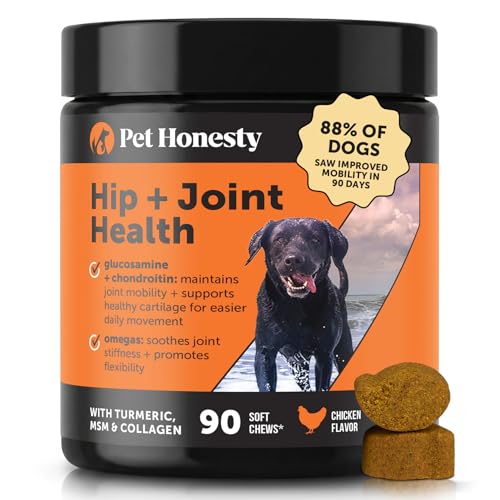
Pet Honesty Hip + Joint Soft Chews with Turmeric (90 ct)
Clean label with glucosamine, chondroitin, MSM, turmeric, and collagen. Chicken-flavor soft chews for mobility support.

Pet Parents Turmeric & Curcumin SoftSupps with Boswellia (90 ct)
Turmeric-forward formula with curcumin, Boswellia serrata, coconut oil, and hemp. Anti-inflammatory focus at budget pricing.

Grizzly Salmon Plus Omega 3-6-9 Liquid (32 oz)
Omega-3 forward approach. Wild salmon oil in a liquid format that mixes easily into food. Good for dogs who refuse chews.

PetLab Co. Joint Care Chews with Green-Lipped Mussel
Green-lipped mussel as a lead ingredient, plus glucosamine, omega-3, and turmeric for comprehensive joint support.
How Do These 8 Joint Supplements Compare?
| Supplement | Budget | Key Ingredients | Format | Best For |
|---|---|---|---|---|
| Nutramax Cosequin Plus MSM | Under $50 | Glucosamine, chondroitin, MSM | Chewable tablet | Overall best, vet-trusted |
| Zesty Paws Mobility Bites | Under $50 | Glucosamine, chondroitin, MSM, vitamins C and E | Soft chew | Picky eaters, value |
| VetriScience GlycoFlex Plus | Under $100 | Glucosamine, green-lipped mussel, MSM, chondroitin | Soft chew | Advanced arthritis |
| Nutramax Dasuquin with MSM | Under $100 | Glucosamine, chondroitin, MSM, ASU | Soft chew | Severe joint disease |
| Pet Honesty Hip + Joint | Under $50 | Glucosamine, chondroitin, MSM, turmeric | Soft chew | Clean label buyers |
| Pet Parents Turmeric & Curcumin | Under $50 | Turmeric, curcumin, Boswellia | Soft chew | Anti-inflammatory focus, budget |
| Grizzly Salmon Plus Omega 3-6-9 | Under $50 | Salmon oil omega-3s | Liquid | Dogs who refuse chews |
| PetLab Co. Joint Care | Under $50 | Green-lipped mussel, glucosamine, omega-3, turmeric | Soft chew | Joint fluid and cartilage support |
When supplements and beds are not enough
Most of what gets recommended for stiff joints is a daily aid. These are the three that change what a dog can still do, and they are what owners reach for once the cheaper options stop being enough. They cost more because they replace an ability rather than easing a symptom.
Top Picks for This Guide

LetPetRun Rear-Leg Dog Wheelchair, Adjustable
Restores independent movement when the back legs give out. Fitted to your dog's measurements, not a size chart.

DoggoRamps Solid Hardwood Dog Ramp for Furniture
Ends the jump on and off the sofa, which is where most arthritic flare-ups start. Hardwood rather than folding plastic, so it holds a large dog.

Petbobi Dog Stroller for Large and Medium Dogs
Lets a dog that can no longer walk far still come on the walk. Rated to 80 lbs.
Which Ingredients in Joint Supplements Are Actually Proven to Work?
Glucosamine and Chondroitin (The Core Duo)
These two ingredients have the strongest evidence base in canine joint supplement research. Glucosamine provides raw material for cartilage synthesis and repair. Chondroitin helps cartilage retain water and inhibits enzymes that break it down. Together, multiple studies have demonstrated reduction in inflammation markers and improved mobility scores in arthritic dogs. Therapeutic dose: ~20mg glucosamine and 5–10mg chondroitin per pound of body weight daily.
MSM (Methylsulfonylmethane)
A naturally occurring sulfur compound with anti-inflammatory and analgesic properties. MSM reduces oxidative stress in joint tissues and supports connective tissue integrity. Most high-quality joint supplements include MSM alongside glucosamine and chondroitin, if your chosen product doesn't include it, consider adding a separate MSM supplement or looking for a combination product.
Green-Lipped Mussel (Perna canaliculus)
A New Zealand shellfish containing a unique blend of omega-3 fatty acids (including ETA, not found in fish oil), glucosamine, chondroitin, and trace minerals. Multiple studies have shown green-lipped mussel reduces inflammation and pain in arthritic dogs, sometimes with stronger effects than fish oil alone. It's a premium ingredient found in VetriScience GlycoFlex and PetLab Co. products.
Omega-3 Fatty Acids (EPA/DHA)
Potent, well-researched anti-inflammatories. Fish-derived omega-3s (EPA and DHA specifically) work through a different mechanism than glucosamine, targeting the inflammatory cascade directly. The fish oil guide covers standalone supplementation in detail. Many comprehensive joint supplements now include omega-3s; if yours doesn't, a separate fish oil supplement is a strong complement.
Avocado/Soybean Unsaponifiables (ASU)
The ingredient that distinguishes Dasuquin from Cosequin. ASU is derived from avocado and soybean oils and has shown additive benefits in studies, helping glucosamine and chondroitin work better together while also stimulating cartilage cell repair. For dogs with moderate to severe arthritis who haven't achieved adequate relief from basic glucosamine/chondroitin, upgrading to a product with ASU is a reasonable next step before moving to prescription pain medications.
What Are the Signs My Senior Dog Needs Joint Supplements?
Start watching for these early and late-stage indicators that joint degeneration is affecting your dog's quality of life:
- Stiffness after resting: Especially in the morning or after naps. Takes longer than usual to get moving.
- Hesitation at stairs: Pausing at the base of stairs, or needing encouragement to go up or down
- Shortened walks: Lagging behind, wanting to turn home sooner than before
- Trouble rising from the floor: Struggling to push up from lying down, especially on hard floors
- Licking or chewing joints: Self-directed grooming of hips, elbows, or knees
- Limping or favoring one leg: Especially after exercise or in cold weather
- Muscle loss over the hindquarters: Visible decrease in muscle mass around the hips and thighs
- Behavior changes: Irritability, withdrawal from family, reluctance to be touched
If your dog is showing multiple signs, a vet visit to confirm arthritis or hip dysplasia with X-rays is the right first step. Supplements work best as part of a comprehensive pain management plan.
Shop Vet-Recommended Joint Supplements
Joint Supplement Buyer's Guide for Senior Dog Owners
Check the Actual Milligram Doses
This is the single most important step when comparing joint supplements. Many products list impressive ingredient names but deliver sub-therapeutic amounts. Calculate the total glucosamine your dog needs based on their weight (20mg/lb/day), then divide by the milligrams per chew to find how many chews are needed. If you'd need 5+ chews to reach a therapeutic dose, the product isn't worth its price tag.
Look for the NASC Quality Seal
The National Animal Supplement Council quality seal indicates the manufacturer has passed facility inspections and third-party testing for ingredient accuracy and label claims. Nutramax (both Cosequin and Dasuquin) consistently earns this certification. It's not a guarantee of efficacy, but it is a meaningful signal of manufacturing integrity.
Match the Formula to the Severity
For prevention and early-stage stiffness: Cosequin DS or Pet Honesty are cost-effective starting points. For moderate arthritis with clear mobility impact: Dasuquin, GlycoFlex 3, or PetLab Co. For dogs on prescription pain medication who want maximum joint support: work with your vet to build a comprehensive protocol that may include multiple supplement types.
Related Mobility and Joint Guides
- Arthritis in Senior Dogs: Complete management guide
- Glucosamine for Dogs: Complete Guide: Deep dive on dosing and research
- Fish Oil for Senior Dogs: Complementary anti-inflammatory support
- Hip Dysplasia in Older Dogs: When joint issues go beyond arthritis
- Best Orthopedic Beds for Senior Dogs: Supporting joints around the clock
Single-product reviews
Two are reviewed in full: our Nutramax Dasuquin MSM review and our Nordic Naturals Omega-3 Pet review, which compares the evidence behind each honestly.
Frequently Asked Questions
How long before I see results from joint supplements?
Most veterinarians and supplement manufacturers recommend allowing 4–8 weeks of consistent daily use before evaluating results. Glucosamine and chondroitin work by building up in joint tissue over time (they're not fast-acting pain relievers. Some owners notice subtle improvements (more willingness to stand up, slightly longer walks) in 2–3 weeks, but significant changes typically take a full month. Track your dog's mobility objectively) distance walked, ability to climb stairs, time to stand from lying down, so you have data to work with.
What is the correct glucosamine dose for senior dogs?
The standard therapeutic loading dose is approximately 20mg of glucosamine per pound of body weight per day. For a 50-pound dog, that's 1,000mg daily. Many supplements recommend a higher 'loading dose' for the first 4–6 weeks (sometimes double), then dropping to a maintenance dose. Always check the milligrams per chew and calculate how many your dog needs daily based on their weight, many products contain sub-therapeutic doses if you follow the 'one chew per day' directions.
Can my dog take joint supplements and prescription pain medication together?
In most cases, yes, glucosamine, chondroitin, and MSM are generally considered safe alongside NSAIDs like carprofen or meloxicam. However, some supplements (particularly those containing omega-3 fatty acids or turmeric in high doses) have mild blood-thinning properties that could interact with certain medications. Always tell your vet exactly which supplements your dog takes, especially before surgery or if your dog is on blood thinners or steroids.
Is Cosequin or Dasuquin better for senior dogs?
Both are made by Nutramax, the most vet-recommended joint supplement brand. Dasuquin contains an additional ingredient, avocado/soybean unsaponifiables (ASU), which research suggests provides additive benefits beyond glucosamine and chondroitin alone. For dogs with more advanced arthritis or who haven't responded fully to Cosequin, Dasuquin is worth the additional cost. For dogs in early joint decline as a preventive measure, Cosequin DS is an excellent, more affordable choice.
Do joint supplements prevent arthritis, or just treat it?
The evidence is stronger for joint supplements slowing progression of existing joint degeneration than preventing it from starting. That said, many veterinarians recommend starting glucosamine and chondroitin before clinical signs appear, especially in large breeds with high arthritis risk (Labs, German Shepherds, Goldens). Think of it like taking calcium to support bone density: you start before the problem, not after. For dogs already showing stiffness or mobility changes, supplements are part of a management plan, not a cure.
Are natural joint supplements like turmeric effective for dogs?
Turmeric contains curcumin, which has genuine anti-inflammatory properties, but bioavailability in dogs is limited, meaning they absorb and use it poorly. Products that enhance bioavailability (piperine/black pepper extract, liposomal delivery) may improve results. Fish oil (omega-3 EPA/DHA) has stronger and more consistent evidence for reducing joint inflammation in dogs than turmeric. For best results, combine a proven glucosamine/chondroitin supplement with omega-3s rather than relying on turmeric alone.
Can I give my small senior dog the same joint supplements as a large dog?
Yes, the same ingredients (glucosamine, chondroitin, MSM) are appropriate for dogs of all sizes, but the dose scales with weight. A 10-pound dog needs roughly 200mg of glucosamine daily, while a 100-pound dog needs 2,000mg. Many supplements come in small and large dog formulations with different chew sizes to make appropriate dosing easier. Always calculate the dose based on your dog's current weight, not their 'ideal' weight.
Should I give joint supplements with or without food?
Most joint supplements can be given with or without food, but taking them with a meal typically improves compliance (your dog is more motivated) and may improve absorption for some ingredients. Glucosamine and chondroitin are not known to cause stomach upset, but MSM and omega-3 fatty acids can occasionally cause mild digestive effects when given on an empty stomach. Treat-based soft chews are usually given as a treat separate from meals, this is fine and doesn't affect efficacy.
Need more help with your aging dog?
Browse our guides by topic to find practical solutions.
Wellness Planner, $39