Best Dog Wheelchairs for Senior Dogs (2026)
Top rear-support and full-support dog wheelchairs for aging and paralyzed dogs. Sizing guide, fit tips, and 8 best picks from $60-$500.
Watching a dog lose their ability to walk is one of the most difficult experiences in pet ownership. But here is what many families discover: dogs who can no longer use their back legs often have no idea they are supposed to stop living. With the right wheelchair, a dog who could barely stand can be zooming down the hall or sniffing through the backyard again within days. A dog wheelchair does not just restore mobility, it restores joy.
We researched the leading dog mobility carts with careful attention to build quality, size adjustability, and the specific needs of senior dogs managing degenerative myelopathy, IVDD, spinal injury, and severe arthritis. Here are the eight best options available in 2026.
8 Best Dog Wheelchairs and Mobility Aids (2026)

Walkin' Wheels Dog Wheelchair for Large Dogs 70-180 lbs
The most widely vet-recommended rear-support chair. Fully adjustable aluminum frame built to last years. Best choice for large breeds with DM or rear paralysis.

Walkin' Wheels Dog Wheelchair for Med/Large Dogs 50-69 lbs
Same vet-approved adjustable design sized for medium and large dogs. Resizes as your dog's body changes with muscle loss.

Walkin' Wheels Corgi Dog Wheelchair 11-44 lbs
Long-body design tuned for Corgis, Dachshunds, and other small-to-medium breeds prone to IVDD. Vet approved.

Snugrance Large Adjustable Rear-Leg Wheelchair
Adjustable rear-support cart with breathable air-mesh harness for arthritis, paralysis, and post-surgery recovery. Strong mid-range value for larger dogs.

LetPetRun Adjustable Rear-Leg Dog Wheelchair
Lightweight adjustable rear-support cart for injured or paralyzed dogs. Easy assembly and a good first chair for medium dogs.

LetPetRun 4-Wheel Full-Body Support Wheelchair
Full quad-support cart for dogs with both front and rear weakness. Lightweight and adjustable for small dogs 11-18 lbs.

LetPetRun Adjustable Wheelchair for Extra-Small Dogs
Budget-friendly lightweight rear-support cart for the smallest dogs. Good for trial use before committing to a premium chair.
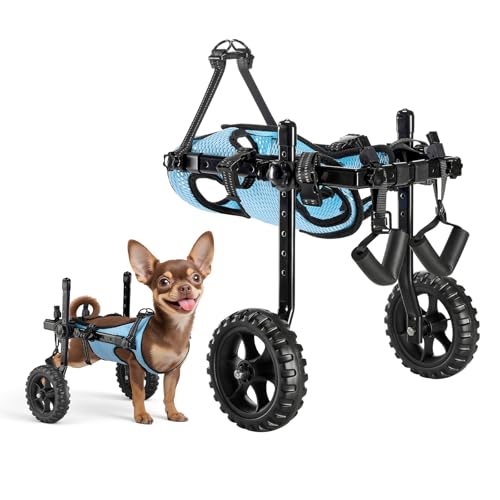
VEVOR Rear-Leg Wheelchair for Small Dogs up to 22 lbs
Affordable two-wheel cart with shock-absorbing wheels for small disabled or injured dogs. Basic but functional starter option.
Who Needs a Dog Wheelchair?
Dog wheelchairs serve dogs whose hind legs can no longer reliably support their weight. The most common conditions that lead families to consider a wheelchair include:
- Degenerative Myelopathy (DM): A progressive neurological disease similar to ALS in humans, most common in German Shepherds, Corgis, Boxers, and Chesapeake Bay Retrievers. The hind limbs gradually lose function over months to years.
- Intervertebral Disc Disease (IVDD): Disc herniation that compresses the spinal cord. Common in Dachshunds, Basset Hounds, and other long-bodied breeds. Can cause sudden or gradual hind limb paralysis.
- Spinal injury or stroke: Traumatic damage or vascular events that disrupt the neural signals to the hind legs
- Severe hip dysplasia or arthritis: When joint pain and muscle loss advance to the point where standing and walking become extremely painful or unsafe
- Fibrocartilaginous embolism (FCE): A spinal cord stroke that can cause sudden one-sided or bilateral rear limb weakness
If your dog has been diagnosed with any of these conditions and still shows appetite, interest in their environment, and engagement with family, they are almost certainly a wheelchair candidate worth discussing with your vet.
When supplements and beds are not enough
Most of what gets recommended for stiff joints is a daily aid. These are the three that change what a dog can still do, and they are what owners reach for once the cheaper options stop being enough. They cost more because they replace an ability rather than easing a symptom.
Top Picks for This Guide
LetPetRun Rear-Leg Dog Wheelchair, Adjustable
Restores independent movement when the back legs give out. Fitted to your dog's measurements, not a size chart.

DoggoRamps Solid Hardwood Dog Ramp for Furniture
Ends the jump on and off the sofa, which is where most arthritic flare-ups start. Hardwood rather than folding plastic, so it holds a large dog.

Petbobi Dog Stroller for Large and Medium Dogs
Lets a dog that can no longer walk far still come on the walk. Rated to 80 lbs.
How to Choose a Dog Wheelchair
Custom vs. Adjustable vs. Standard
Fully custom chairs are built to a dog's exact measurements by specialty makers. They fit perfectly and last longer, but they cost more and carry a 2 to 4 week lead time. For most families, an adjustable chair you can order today is the better path.
Adjustable chairs like the Walkin' Wheels Dog Wheelchair offer multiple size settings across weight ranges and can be resized as your dog's body changes due to muscle loss or weight change. They are the most popular choice because they balance quality with flexibility and are available quickly.
Standard or fixed budget chairs work best for small dogs where sizing is less critical and for owners who want to try the concept before committing to a more expensive option.
Wheel Size and Terrain
Small plastic wheels (2-3 inches) work fine on smooth indoor surfaces but struggle on grass, gravel, and uneven ground. If your dog will be spending time outdoors, look for larger wheels (4+ inches) with pneumatic or foam-filled tires for better obstacle clearance and rolling efficiency. A dog who gets stuck in the yard or on a door threshold is likely to become frustrated and reluctant to use the chair.
Saddle and Harness Comfort
The saddle is the padded support that holds your dog's hind end in the chair. Look for thick padding, breathable material, and smooth edges with no exposed hardware that could cause rubbing. A well-padded saddle is particularly important for dogs who will use the chair for extended periods or who have lost muscle mass over their hindquarters, leaving less natural padding between bone and hardware.
Front Leg Clearance
The wheelchair should position your dog so their front legs can walk naturally without the frame getting in the way. This sounds obvious but is a common fit issue with poorly designed or incorrectly sized chairs. Check that the frame sits behind your dog's elbows and does not restrict their natural gait.
Most Popular: Walkin' Wheels Series
Walkin' Wheels is the most widely recommended dog wheelchair brand by veterinarians and rehabilitation specialists.
Getting Your Dog Started in a Wheelchair
The first session should be short, five to ten minutes on a smooth, flat floor with you close by. Let your dog sniff and explore the chair before you put them in it. Once they are in, use treats or a favorite toy to motivate them to move forward. Avoid pushing or steering; the goal is for your dog to self-propel so they build the physical confidence and muscle memory that makes the chair feel natural.
Increase session length gradually over one to two weeks. Most dogs move from brief supervised sessions to 30-60 minute independent outings as they build confidence and conditioning. Watch for fatigue, overheating, or signs of skin irritation at contact points, and always remove the chair when your dog is resting.
Combining wheelchair use with aquatic therapy (a canine flotation aid in a pool or hydrotherapy tub) can accelerate recovery and conditioning significantly. The water supports body weight while allowing hind leg movement, building muscle without the impact stress of land exercise.
Daily Wheelchair Care for Senior Dogs
Inspect the saddle and harness contact areas daily for any redness, hair loss, or skin breakdown. These are early warning signs of a fit issue that should be addressed before they become open sores. Keep the wheels clean and check that all hardware is tight, loose bolts can cause sudden collapses that startle or injure your dog.
Store the wheelchair in a consistent place so your dog learns to associate it with activity time. Many wheelchair dogs become genuinely excited when they see their chair come out, understanding it means they are about to go somewhere and do something. This emotional conditioning is part of the quality of life benefit that makes wheelchairs transformative for dogs and families alike.
Pros and Cons of Dog Wheelchairs
Pros
- Restores independent mobility for dogs with hind limb paralysis or weakness
- Dramatically improves quality of life and mental engagement
- Slows muscle atrophy by keeping dogs active
- Can extend a dog's active, happy life by months to years
- Most dogs adapt quickly and respond with obvious enthusiasm
Cons
- High-quality chairs are a significant upfront investment ($150-$500+)
- Requires correct fit to avoid pressure sores or injuries
- Dogs cannot use the chair unsupervised or for sleeping
- Some dogs with advanced cognitive decline or severe pain may not adapt well
- Custom chairs require 2-4 week lead time from order to delivery
Budget Options for Small Dogs
For small dogs or initial trials, these more affordable chairs offer basic mobility support.
Related Guides
- Arthritis in Senior Dogs: Managing pain and mobility in aging dogs
- Old Dog's Back Legs Giving Out: Understanding causes and options
- Best Hip and Joint Chews: Supplement support for arthritic joints
- Best Dog Ramps for Couches: Safe furniture access for mobility-limited dogs
Single-product reviews
Our Walkin' Wheels dog wheelchair review goes deeper on the frame sizes, the measuring that decides the fit, and the point at which a rear-support chair stops being the right device.
Editor's Pick · Affiliate link
An Orthopedic Bed for a Stiff Senior Dog
A supportive memory-foam bed is the cheapest change that visibly helps an arthritic dog get up more easily. Waterproof and washable matters more with age.
Frequently Asked Questions
How do I know if my dog is a good candidate for a wheelchair?
Dogs who have lost the use of their hind legs due to degenerative myelopathy, spinal injury, intervertebral disc disease (IVDD), stroke, or severe arthritis are typically the best candidates. If your dog still has front leg strength and shows interest in moving and engaging with their environment, a wheelchair can dramatically improve their quality of life. Your veterinarian can assess whether your dog has the physical stamina and mental resilience for wheeled mobility. Dogs with degenerative myelopathy especially benefit from early introduction before the condition advances further.
What measurements do I need to order a dog wheelchair?
Most manufacturers require at minimum: your dog's weight, the height from the floor to the hip joint (the point where the hind leg meets the body), the width across the hips, and the length from the hip to the elbow. Some also ask for the circumference of the dog's chest for harness fitting. Measure twice, a poorly fitting wheelchair can cause pressure sores, chafing, or muscle strain. Most companies provide detailed measuring guides, and many offer phone or video consultations to confirm sizing before you order.
How long does it take for a dog to learn to use a wheelchair?
Most dogs adapt surprisingly quickly, usually within a few days to a couple of weeks. The first sessions should be short (5-10 minutes) on a smooth, flat surface. Let your dog find their own motivation to move, ideally following treats, a favorite person, or a familiar smell. Avoid forcing movement. Some dogs take to the chair within minutes; others need a gradual adjustment period. Patience and positive reinforcement are the keys. Dogs who have been sedentary for some time may also need time to rebuild muscle strength alongside wheelchair training.
Can dogs with partial hind leg function use a wheelchair?
Yes, and often with excellent results. Dogs with partial paralysis or significant weakness who can still bear some weight intermittently do well in wheelchairs that provide support without completely replacing leg function. This is called rear-limb assisted mobility rather than full replacement. The wheelchair takes the overload off weak limbs while still allowing the dog to use whatever strength remains. This can actually slow the progression of some conditions by keeping the dog moving.
How do I prevent pressure sores from a dog wheelchair?
Pressure sores develop when the same areas of skin are compressed for long periods without relief. Prevent them by: using the wheelchair for supervised sessions rather than leaving it on all day, ensuring the fit is snug but not tight (you should be able to slip two fingers under any strap), checking skin contact points daily for redness or irritation, using saddle sores-grade padding on any contact areas, and giving your dog regular breaks on a soft, supportive surface. Most reputable manufacturers offer padding accessories specifically for this purpose.
What is the difference between a rear-support and full-support wheelchair?
Rear-support wheelchairs (the most common type) support only the hind end, allowing the dog to walk normally on their front legs while their back legs are held in the wheelchair frame. Full-support or quad wheelchairs support all four limbs for dogs with weakness or paralysis in both front and rear legs. Rear-support chairs are the right choice for hind leg paralysis or weakness. Full quad support is for dogs with tetraplegia or very limited overall mobility.
Are budget dog wheelchairs safe?
Budget wheelchairs (under $150) vary widely in quality. The primary safety concerns are structural integrity (will it hold your dog's weight without breaking or collapsing), adjustability (a rigid one-size chair can cause injury), and contact material quality (rough hardware can cause skin abrasions). Read reviews carefully for any mention of breaking, bending, or poor welds on budget options. For small dogs under 15 lbs, budget options like LOVEPLUSPET can work well. For larger dogs, investing in a better-made chair reduces injury risk and frustration.
Can my dog go outside in a wheelchair?
Absolutely, and outdoor use is one of the greatest joys wheelchairs restore. Smooth pavement, packed dirt paths, and short grass all work well for most wheelchair dogs. Longer grass, loose gravel, mud, and sand can slow or trap the wheels. Wheel size matters for outdoor use, larger wheels with pneumatic tires (like those on the Walkin' Wheels) handle varied terrain much better than small plastic wheels. Start with easy surfaces and gradually introduce more varied terrain as your dog gains confidence and strength.
Need more help with your aging dog?
Browse our guides by topic to find practical solutions.
Wellness Planner, $39