Old Dog Limping on Back Leg, Causes & Help
Your old dog is limping on the back leg. Learn about ACL tears, hip dysplasia, arthritis, and degenerative myelopathy in senior dogs plus treatment options.
A back leg limp in your older dog is concerning for good reason, the hind legs are critical for standing up, climbing, jumping, and maintaining balance. Whether your dog's limp appeared suddenly or has been slowly worsening, understanding the possible causes helps you make informed decisions about care and treatment.
This guide walks you through the most common reasons senior dogs develop a hind leg limp, how to assess the severity, when to seek veterinary care, and what you can do to help your dog move more comfortably.
Products for Back Leg Limping

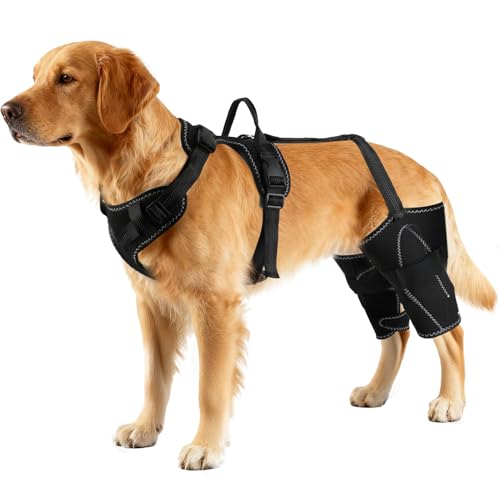
Vivifying Hip Support Dog Harness
Lift and support the hind end for walking and standing

STRELLALAB Dog Joint Supplement
Glucosamine, chondroitin, and MSM for hind leg joint health

Reading the Back Leg Limp
The way your dog limps tells a story. With front leg limps, dogs bob their head. With back leg limps, the pattern is different, watch the hips. A dog with a painful back leg will drop their hip on the good side and hike it up on the painful side. They may also shorten their stride on the affected leg, reducing the time that leg spends bearing weight.
Sudden onset: A limp that appears abruptly, especially after activity, may indicate a cruciate ligament tear, muscle or tendon injury, or paw injury. Gradual onset: A limp that has been slowly developing over weeks to months typically points to arthritis, hip dysplasia progression, or degenerative myelopathy. Intermittent: A limp that comes and goes may suggest a luxating patella or early arthritis that flares under certain conditions.
When supplements and beds are not enough
Most of what gets recommended for stiff joints is a daily aid. These are the three that change what a dog can still do, and they are what owners reach for once the cheaper options stop being enough. They cost more because they replace an ability rather than easing a symptom.
Top Picks for This Guide

LetPetRun Rear-Leg Dog Wheelchair, Adjustable
Restores independent movement when the back legs give out. Fitted to your dog's measurements, not a size chart.

DoggoRamps Solid Hardwood Dog Ramp for Furniture
Ends the jump on and off the sofa, which is where most arthritic flare-ups start. Hardwood rather than folding plastic, so it holds a large dog.

PRIORPET Folding Birchwood Dog Ramp for High Beds
A lower-cost hardwood alternative that folds flat and carries dogs up to 120 lbs, with safety rails and an anti-slip surface.

Petbobi Dog Stroller for Large and Medium Dogs
Lets a dog that can no longer walk far still come on the walk. Rated to 80 lbs.
Common Causes of Back Leg Limping
Cruciate Ligament (ACL) Tears
Cranial cruciate ligament disease is one of the most common orthopedic conditions in dogs and frequently affects seniors. Unlike the dramatic ACL tears in human athletes, cruciate disease in older dogs often involves gradual degeneration of the ligament over time. The dog may develop a progressive limp that worsens over weeks, or the weakened ligament may suddenly give way during normal activity, causing acute lameness.
Signs of a cruciate tear include sudden onset limping or worsening of an existing limp, difficulty bearing weight on the affected leg, sitting with the leg extended to the side rather than tucked underneath, swelling around the knee joint, and clicking or popping in the knee during movement.
Treatment options range from surgical repair (TPLO, TTA, or lateral suture techniques) to conservative management with rest, anti-inflammatory medication, physical therapy, and a supportive knee brace. The best approach depends on your dog's size, age, health status, and activity level.
Hip Dysplasia
Hip dysplasia is a developmental condition where the hip joint does not form properly, leading to loose joint fit, abnormal wear, and progressive arthritis. Dogs who have lived with mild hip dysplasia their entire lives often experience significant worsening in their senior years as arthritis accumulates.
Signs of hip dysplasia-related limping include reluctance to rise from sitting or lying, a swaying or waddling gait, bunny-hopping where both back legs move together, difficulty climbing stairs, and decreased interest in activities that require jumping or vigorous movement. The hind leg muscles may appear smaller compared to a healthy dog due to decreased use and muscle atrophy.

Arthritis
Osteoarthritis in the hip, knee (stifle), or ankle (hock) joints is extremely common in senior dogs. The progressive breakdown of joint cartilage creates pain, stiffness, and reduced range of motion. Arthritic hind leg limping is typically worse after rest (morning stiffness), improves with gentle movement, worsens with overexertion, and fluctuates with weather changes and activity levels.
Degenerative Myelopathy (DM)
Degenerative myelopathy causes progressive hind leg weakness that may initially look like a limp. As the spinal cord deteriorates, the dog loses proprioception (awareness of foot position) and strength in the back legs. Early signs include scuffing the back toenails, knuckling over on the paws, crossing the back legs when standing, and a wobbly, ataxic gait that looks more like loss of coordination than a classic pain limp.
An important distinction: DM itself is painless, so if your dog's hind leg limp is clearly associated with pain, DM is less likely to be the sole cause, though DM and arthritis commonly coexist.
Luxating Patella
A luxating patella (slipping kneecap) causes intermittent back leg lameness when the kneecap slides out of its groove. The dog may suddenly hold the leg up for a few steps, then walk normally as the kneecap pops back into place. Over time, the luxation can cause cartilage damage and arthritis, leading to more constant lameness. This condition is more common in small breeds but can affect any dog.
Hind Leg Support Products
- Dog Knee Braces - Stabilize knee joints with cruciate ligament injuries
- Dog Hip Support Braces - Compression and support for arthritic hips
- Rear Lift Harnesses - Help your dog stand, walk, and navigate stairs
Home Management Strategies
Weight Management
Maintaining an optimal body weight is one of the most impactful things you can do for a dog with a hind leg limp. Every extra pound increases the stress on already compromised joints. Because dogs with hind leg problems are often less active, their caloric needs decrease. Work with your veterinarian on a weight management plan that reduces calories without sacrificing nutrition.
Controlled Exercise
Regular, gentle exercise maintains muscle mass and joint flexibility. Short, slow leash walks on flat, even surfaces are ideal. Swimming and underwater treadmill sessions are excellent because they provide exercise without the impact of weight bearing. Avoid activities that involve sudden direction changes, jumping, or running on uneven terrain.
Environmental Modifications
Use ramps instead of stairs wherever possible. Place non-slip mats on smooth floors, especially at transition points. Elevate food and water bowls to reduce the strain of bending. Provide a firm orthopedic bed that is easy to get in and out of. Block access to stairs with baby gates when unsupervised.

When to See the Vet
Back leg limping in a senior dog should be evaluated by a veterinarian, particularly in these situations:
- Sudden onset: non-weight-bearing lameness or acute worsening
- Progressive worsening over days to weeks despite rest
- Swelling around any joint or along the leg
- Loss of muscle visible on the affected leg compared to the other
- Dragging the foot or knuckling over on the paw
- Loss of bladder or bowel control alongside the limping
- Limp that does not improve after five days of reduced activity
- Pain when the leg or hip is gently handled
Your veterinarian will perform an orthopedic examination, checking joint stability, range of motion, and pain responses. X-rays are commonly recommended to evaluate joint structures and rule out fractures or tumors. Blood work may be done to check for systemic conditions. Referral to a veterinary orthopedic surgeon may be recommended for suspected cruciate tears or complex cases.
Working Toward Comfort
Managing a back leg limp in an older dog is about partnership, between you, your dog, and your veterinary team. The right combination of medical treatment, physical therapy, home modifications, and supportive devices can make a remarkable difference in your dog's comfort and mobility. Many dogs with hind leg issues continue to enjoy walks, play, and daily activities with appropriate management.
Focus on what your dog can do rather than what they cannot. Celebrate the small victories, a walk around the block, a tail wag at the door, standing up on the first try. These moments add up to a quality of life that is well worth the effort.
Related Guides
- Old Dog Back Legs Giving Out - When hind leg weakness goes beyond a limp.
- Hip Dysplasia in Older Dogs - Managing hip-related hind leg lameness.
- Best Dog Knee Braces - Review of knee support options for cruciate injuries.
- Exercises to Strengthen Old Dog Back Legs - Safe exercises to build hind leg muscle.
Frequently Asked Questions
Why is my old dog limping on the back leg?
The most common causes of back leg limping in senior dogs are arthritis in the hip, knee, or ankle joints, cruciate ligament (ACL) tears or degeneration, hip dysplasia, degenerative myelopathy, luxating patella, and less commonly, bone cancer or nerve issues. The pattern of the limp (sudden versus gradual, weight-bearing versus non-weight-bearing) helps narrow down the cause.
Can an old dog tear their ACL?
Yes. Cranial cruciate ligament (CCL, the dog equivalent of the human ACL) tears are common in senior dogs. In older dogs, the ligament often degenerates gradually rather than tearing from a single traumatic event. The dog may develop a progressive limp that worsens over time, or the weakened ligament may suddenly rupture during normal activity. Dogs who tear one cruciate have a 40 to 60 percent chance of tearing the other within one to two years.
Is hip dysplasia worse in senior dogs?
Yes. Dogs who have had hip dysplasia throughout their lives often experience significant worsening in their senior years. The abnormal joint mechanics lead to accelerated arthritis development, and the combination of dysplasia and arthritis can cause substantial hind leg lameness, difficulty rising, reluctance to climb stairs, and a bunny-hopping gait. Pain management and mobility support become increasingly important as these dogs age.
Should my old dog have surgery for a torn ACL?
Surgery may still be an option for senior dogs with cruciate tears, but the decision involves weighing the dog's overall health, age, activity level, and ability to tolerate anesthesia and recovery. Some senior dogs do well with conservative management including rest, anti-inflammatory medication, physical therapy, and a supportive knee brace. Discuss all options with your veterinarian, and consider a consultation with a veterinary orthopedic surgeon.
How can I tell if my old dog has hip or knee problems?
Hip problems in senior dogs often manifest as difficulty rising, a swaying gait, reluctance to climb stairs, and bunny-hopping where both back legs move together. Knee problems typically cause a more obvious limp on one specific leg, and the dog may sometimes hold the affected leg up while standing. Your dog may sit with the affected leg extended to the side rather than tucked neatly underneath. A veterinary orthopedic exam and X-rays can provide a definitive diagnosis.
Will a knee brace help my old dog's back leg limp?
A knee brace can provide meaningful support for dogs with cruciate ligament injuries or instability, particularly those who are not surgical candidates. Braces work by stabilizing the joint and limiting abnormal movement. They are most effective when properly fitted and used consistently during activity. A brace is not a substitute for veterinary care, but it can be a valuable part of a conservative management plan.
Can physical therapy help my old dog's back leg limp?
Yes. Canine rehabilitation therapy can significantly improve hind leg function in senior dogs. Underwater treadmill therapy allows exercise without full weight bearing, strengthening muscles while being gentle on joints. Balance exercises improve stability. Range-of-motion work maintains joint flexibility. A certified canine rehabilitation practitioner can design a program tailored to your dog's specific condition and needs.
Need more help with your aging dog?
Browse our guides by topic to find practical solutions.
Wellness Planner, $39