Senior Dog Supplement Dosing Chart: Glucosamine and Omega-3 by Weight
Typical daily doses of glucosamine, chondroitin, and omega-3 fish oil for senior dogs by body weight, plus safety cautions and when to involve your vet.
Quick Answer
Typical daily targets for senior dogs: glucosamine about 20 mg per pound of body weight (1,000 mg for a 50 lb dog), chondroitin about 15 mg per pound, and omega-3 fish oil about 50 to 100 mg of combined EPA and DHA per kilogram depending on whether the goal is general wellness or vet-guided joint support. These are researched typical ranges, not prescriptions. Confirm doses with your veterinarian before starting anything new.
Glucosamine and Chondroitin Dosing by Weight
Glucosamine with chondroitin is the most widely used joint supplement for aging dogs. The maintenance targets below reflect the commonly cited guideline of about 20 mg of glucosamine and 15 mg of chondroitin per pound of body weight per day. Many veterinary brands recommend starting with a loading phase at roughly double the maintenance dose for the first 4 to 6 weeks, then dropping to maintenance.
| Dog's Weight | Glucosamine (mg/day, maintenance) | Chondroitin (mg/day) | Loading Dose (first 4-6 weeks) |
|---|---|---|---|
| 10 lbs | 200 | 150 | 400 |
| 20 lbs | 400 | 300 | 800 |
| 30 lbs | 600 | 450 | 1,200 |
| 40 lbs | 800 | 600 | 1,600 |
| 50 lbs | 1,000 | 750 | 2,000 |
| 60 lbs | 1,200 | 900 | 2,400 |
| 70 lbs | 1,400 | 1,050 | 2,800 |
| 80 lbs | 1,600 | 1,200 | 3,200 |
| 90 lbs | 1,800 | 1,350 | 3,600 |
| 100 lbs | 2,000 | 1,500 | 4,000 |
Doses are per day and usually split across meals. Your product's label may differ because formulations combine glucosamine with chondroitin, MSM, or green-lipped mussel; when the label and this chart disagree, follow the label and your vet.
Not sure glucosamine is the right pick for your dog's stiffness? We compare the options head to head in glucosamine vs fish oil, turmeric vs glucosamine, and our full senior dog joint supplement comparison.
Omega-3 (Fish Oil) Dosing by Weight
Fish oil dosing is based on the combined EPA and DHA content printed on the supplement label, not the total milligrams of oil. A 1,000 mg softgel often contains only about 300 mg of EPA plus DHA. The ranges below reflect commonly published guidance of roughly 50 to 75 mg of EPA plus DHA per kilogram for general wellness, and 75 to 100 mg per kilogram for joint and inflammatory support under veterinary guidance.
| Dog's Weight | General Wellness (mg EPA+DHA/day) | Joint Support, Vet-Guided (mg EPA+DHA/day) |
|---|---|---|
| 10 lbs (4.5 kg) | 230 to 340 | 340 to 450 |
| 20 lbs (9.1 kg) | 450 to 680 | 680 to 910 |
| 30 lbs (13.6 kg) | 680 to 1,020 | 1,020 to 1,360 |
| 40 lbs (18.1 kg) | 910 to 1,360 | 1,360 to 1,810 |
| 50 lbs (22.7 kg) | 1,130 to 1,700 | 1,700 to 2,270 |
| 60 lbs (27.2 kg) | 1,360 to 2,040 | 2,040 to 2,720 |
| 70 lbs (31.8 kg) | 1,590 to 2,380 | 2,380 to 3,180 |
| 80 lbs (36.3 kg) | 1,810 to 2,720 | 2,720 to 3,630 |
| 90 lbs (40.8 kg) | 2,040 to 3,060 | 3,060 to 4,080 |
| 100 lbs (45.4 kg) | 2,270 to 3,400 | 3,400 to 4,540 |
Start at the low end and build up over 1 to 2 weeks to avoid digestive upset, and remember fish oil adds calories that count toward the daily total on our senior dog feeding chart. Do not use the joint-support range without veterinary guidance.
For product selection, storage, and quality markers like third-party purity testing, see our full guide to fish oil for senior dogs.
Popular Senior Dog Supplements

Nutramax Cosequin Joint Health (Glucosamine + Chondroitin + MSM)
Widely vet-recommended joint supplement with labeled dosing by weight
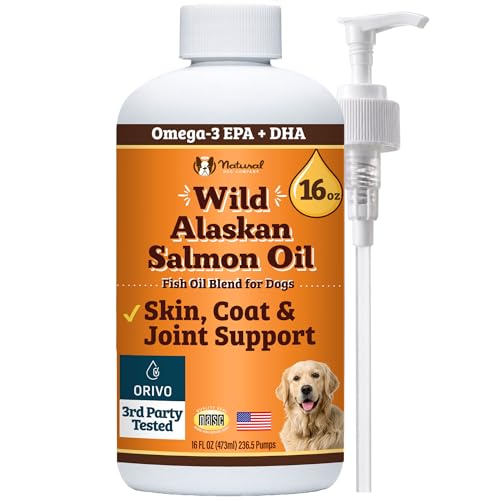
Natural Dog Company Wild Alaskan Salmon Oil
Liquid omega-3 with EPA/DHA content listed per pump

Zesty Paws Senior Advanced Multivitamin Chews
Combination senior formula with glucosamine and probiotics
Other Common Senior Supplements: Quick Reference
These supplements vary widely by formulation, so per-pound math is less reliable than for glucosamine and fish oil. Treat the notes below as orientation for a conversation with your vet, then follow your specific product's label.
| Supplement | Typical Use in Seniors | Dosing Approach |
|---|---|---|
| MSM (methylsulfonylmethane) | Joint comfort, often combined with glucosamine | Commonly 50 to 100 mg per 10 lbs daily in combination products; follow the label |
| Green-lipped mussel | Natural source of omega-3s and glycosaminoglycans | Label-based, often 15 to 25 mg per pound in dedicated products |
| Probiotics | Digestive regularity, recovery after antibiotics | Products typically deliver 1 to 10 billion CFU daily; see our probiotic guide |
| Turmeric/curcumin | Mild inflammation support | Highly formulation-dependent; absorption varies, so follow the label and your vet |
| SAMe / milk thistle | Liver support, often vet-prescribed | Vet-directed; commonly dosed by weight bands on veterinary products |
| Omega-3 + vitamin E | Vitamin E is often added alongside long-term fish oil use | Vet-directed; do not add high-dose vitamin E on your own |
Before stacking multiple products, read our guide to vitamins for older dogs on avoiding over-supplementation, and see the best anti-inflammatory supplements for how these options compare.
Safety Flags: When a Supplement Needs a Vet Conversation First
| Supplement | Use Extra Caution When |
|---|---|
| Fish oil / omega-3s | Dog takes blood thinners or NSAIDs, has a pancreatitis history, has surgery scheduled, or needs strict calorie control |
| Glucosamine | Shellfish allergy (choose non-shellfish sources), diabetes (monitor glucose), or unexplained digestive upset after starting |
| Turmeric/curcumin | Gallbladder disease, blood thinners, or iron deficiency |
| Any supplement | Kidney or liver disease, multiple daily medications, or a prescription therapeutic diet that is already nutritionally targeted |
One habit prevents most problems: bring every bottle, or a photo of every label, to your next appointment so your vet sees the complete picture. Our senior dog vet visit checklist has a full list of what to bring, and a weekly medication organizer keeps multi-supplement routines consistent, which matters more than perfect dosing precision.
Editor's Pick · Affiliate link
An Orthopedic Bed for a Stiff Senior Dog
A supportive memory-foam bed is the cheapest change that visibly helps an arthritic dog get up more easily. Waterproof and washable matters more with age.
Frequently Asked Questions
How much glucosamine should I give my senior dog?
The commonly cited maintenance target is about 20 mg of glucosamine per pound of body weight per day, so roughly 500 mg for a 25-pound dog, 1,000 mg for a 50-pound dog, and 2,000 mg for a 100-pound dog. Many veterinary products recommend a loading phase at double the maintenance dose for the first 4 to 6 weeks. Follow your specific product's label and confirm the plan with your veterinarian.
How much fish oil can I give my senior dog?
Dosing is based on combined EPA and DHA content, not total oil volume. General wellness support is commonly in the range of 50 to 75 mg of EPA plus DHA per kilogram of body weight daily, while joint and inflammatory support under veterinary guidance often runs 75 to 100 mg per kilogram. For a 50-pound (23 kg) dog, that is roughly 1,100 to 2,300 mg of EPA plus DHA per day depending on the goal. Start low, increase gradually, and check with your vet.
Can I give my senior dog glucosamine and fish oil together?
Yes, and many veterinarians recommend the combination for arthritic seniors because the two work through different mechanisms: glucosamine supports cartilage structure while omega-3s reduce inflammation. Introduce one at a time a couple of weeks apart so you can tell which one causes any digestive upset.
What happens if my dog gets too much fish oil?
The most common effects are soft stool, diarrhea, vomiting, and fishy breath. At persistently high doses, omega-3s can affect platelet function and add meaningful calories, and very high intakes have been associated with delayed wound healing and gastrointestinal upset. Dogs with pancreatitis history and dogs on blood thinners or NSAIDs need veterinary guidance before starting fish oil.
Is glucosamine safe for dogs with health conditions?
Glucosamine is generally well tolerated, but dogs with shellfish allergies should avoid shellfish-derived products, and diabetic dogs should be monitored since glucosamine is an amino sugar. Mild digestive upset when starting is the most common side effect. Always tell your vet about every supplement your dog takes so they can screen for interactions with medications.
How long do joint supplements take to work in senior dogs?
Glucosamine and chondroitin typically need 4 to 6 weeks of consistent daily dosing before improvement shows, which is why loading doses are common. Fish oil usually shows anti-inflammatory effects within 2 to 4 weeks. If you see no change after 8 weeks at an appropriate dose, ask your vet whether a different product or a prescription option makes more sense.
Do senior dogs need a multivitamin?
Dogs eating a complete and balanced commercial diet usually do not need a general multivitamin, and over-supplementation can be harmful. Multivitamins earn their place mainly for dogs on homemade diets or dogs with diagnosed deficiencies. Targeted supplements chosen for a specific problem, such as joints, skin, or cognition, tend to be more useful than broad formulas. Ask your vet what your individual dog actually needs.
Need more help with your aging dog?
Browse our guides by topic to find practical solutions.
Wellness Planner, $39