Senior Dog Food Calculator
Find out exactly how much to feed your aging dog each day, plus estimated monthly food costs.
Enter your dog's current weight in pounds
Your Dog's Feeding Plan
Based on a lb senior dog
Daily Calories
Cups / Day
Per Meal (2x/day)
Monthly Cost Est.
Base metabolic calories
RER x Activity x Condition
Feeding Tips for Your Senior Dog
Monthly Cost Estimate Breakdown
Cost estimates based on average pet food prices. Actual costs vary by brand, retailer, and region. Premium and prescription diets may cost significantly more.
Recommended Senior Dog Foods
How We Calculate Your Senior Dog's Food Needs
Feeding a senior dog the right amount is one of the most important things you can do for their health. Too much food leads to obesity, which worsens joint pain, increases the risk of diabetes, and shortens lifespan. Too little food means your dog misses essential nutrients needed to maintain muscle mass and immune function as they age.
Our calculator uses the veterinary-standard Resting Energy Requirement (RER) formula: 70 x (body weight in kg)^0.75. This gives the baseline calorie need for a dog at rest. We then apply multipliers based on your dog's specific activity level and body condition to arrive at a personalized daily calorie recommendation.
Understanding the Calculation
The RER represents the energy your dog needs just to maintain basic body functions like breathing, digestion, and cell repair. Senior dogs typically need fewer total calories than younger adults because their metabolic rate decreases and they are generally less active. However, some seniors with health conditions like cancer or hyperthyroidism may actually need more calories.
The activity multiplier accounts for your dog's daily exercise level. A sedentary senior who mainly rests gets a lower multiplier (1.2x) than a moderately active senior who still enjoys regular walks and play sessions (1.6x). The body condition modifier adjusts calories up for underweight dogs who need to gain and down for overweight dogs who need to lose.
Senior Dog Nutrition Essentials
Beyond calories, the quality and composition of your senior dog's food matters greatly. Look for formulas with high-quality protein to maintain muscle mass, added glucosamine and chondroitin for joint support, omega-3 fatty acids to reduce inflammation, and easily digestible ingredients for sensitive aging digestive systems. Many premium senior dog foods also include L-carnitine to support metabolism and antioxidants for immune health. Our best senior dog food comparison sets eight formulas side by side.
If your dog has a specific health condition like kidney disease, heart disease, or diabetes, they may benefit from a veterinary prescription diet tailored to that condition. Always discuss major dietary changes with your veterinarian, especially for dogs on medications or managing chronic health issues.
Monitoring and Adjusting
Use this calculator as a starting point and adjust based on your dog's response. Weigh your dog regularly, monthly is ideal for seniors. If they are gaining weight, reduce portions slightly. If they are losing weight unexpectedly, see your vet to rule out underlying conditions. Your dog's feeding needs may change over time as their activity level, health status, and metabolism continue to evolve with age.
More nutrition resources for your senior dog:
Frequently Asked Questions
How many calories does a senior dog need per day?
Senior dogs typically need fewer calories than younger adults because their metabolism slows and activity levels decrease. A general guideline is to calculate the Resting Energy Requirement (RER) using 70 x (weight in kg)^0.75, then multiply by an activity factor between 1.0 and 1.6. This calculator does that math for you based on your dog's specific details.
Should I feed my senior dog wet or dry food?
Both are nutritionally valid. Wet food is often better for senior dogs because it provides extra hydration, is easier to chew for dogs with dental issues, and tends to be more palatable. Dry food is more economical and can help with dental tartar. Many owners find a mix works best. Consult your vet about what suits your dog.
How do I know if my senior dog is overweight?
You should be able to feel your dog's ribs without pressing hard, and they should have a visible waist when viewed from above. If ribs are hard to feel under a layer of fat or there is no visible waist, your dog is likely overweight. Your vet can assess body condition score on a 1-9 scale during regular checkups.
How often should I feed a senior dog?
Most senior dogs do best with two meals per day, split evenly. Some dogs with digestive issues may benefit from three smaller meals. Avoid free-feeding (leaving food out all day) as it makes it difficult to monitor appetite changes, which are an important health indicator in aging dogs.
What ingredients should I look for in senior dog food?
Look for high-quality animal protein as the first ingredient, added glucosamine and chondroitin for joint support, omega-3 fatty acids (fish oil) for inflammation, easily digestible carbohydrates, L-carnitine for metabolism, and antioxidants for immune support. Avoid foods with excessive fillers, artificial preservatives, or added sugars.
Should I add supplements to my senior dog's food?
Many senior dogs benefit from supplements such as glucosamine/chondroitin for joints, fish oil for inflammation and coat health, probiotics for digestion, and potentially a multivitamin. However, always consult your vet before adding supplements, as some can interact with medications or be inappropriate for dogs with certain conditions.
Why is my senior dog eating less than usual?
Decreased appetite in senior dogs can be caused by dental pain, nausea from kidney or liver disease, medication side effects, cognitive dysfunction, reduced sense of smell, or simply lower caloric needs. A sudden or dramatic decrease in appetite warrants a vet visit to rule out underlying health issues.
Complete nutrition tracking for your senior dog
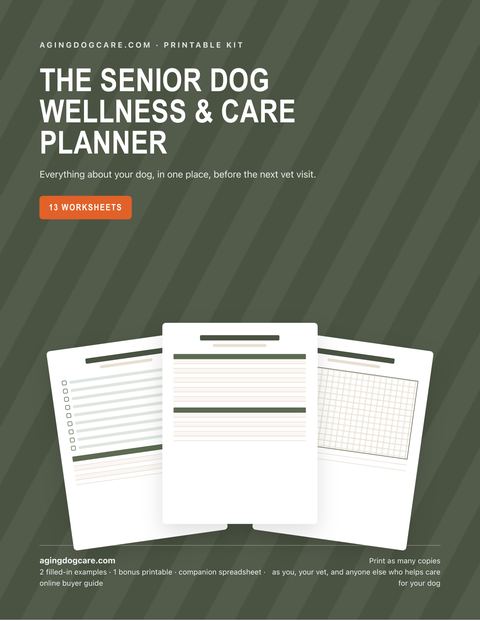
Our Wellness Planner includes a full nutrition guide with calorie tables by breed size, a food comparison worksheet, and supplement chart.
Get the Wellness Planner, $39